How to Choose the Right Geotextile for Your Landfill Project: A Comprehensive Guide
March 2, 2026 — With global infrastructure development and environmental regulations becoming increasingly stringent, the demand for high-performance geosynthetics in landfill construction is surging. Selecting the correct geotextile is not merely a procurement decision; it is a critical engineering choice that impacts the long-term stability, environmental safety, and cost-effectiveness of a landfill. As a leading Chinese geotextile manufacturer, Dalian GeoMax Synthetics Co., Ltd. has supplied millions of square meters of geotextiles to major landfill projects worldwide. This guide draws from that extensive field experience to help engineers and project managers navigate the selection process.
Understanding the Core Functions of Geotextiles in Landfills
In landfill engineering, geotextile fabrics serve several vital functions: separation, filtration, drainage, protection, and reinforcement. A single project often requires multiple types of geotextiles for different layers. The two most common applications are as a cushion/protection layer and a separation layer.
- Cushion/Protection Geotextile: Placed above the geomembrane liner to protect it from puncture by overlying drainage materials or waste. These are typically heavy-duty nonwoven geotextiles with high puncture resistance.
- Separation Geotextile: Used to prevent the mixing of different soil layers or between soil and drainage aggregates, maintaining the integrity and function of each layer. These can range from medium to heavy weight.
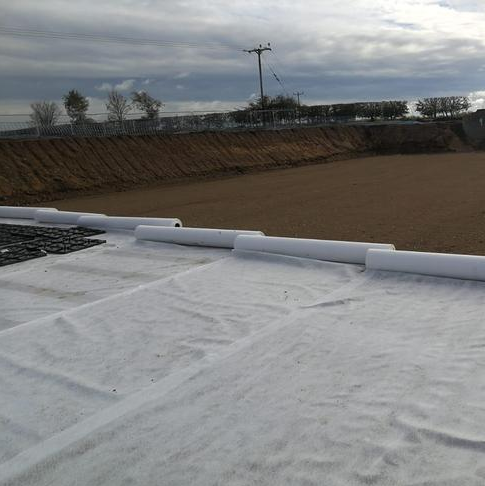
Polyester filament needle-punched geotextile being deployed in a landfill cell, showcasing its role in separation and protection.
Key Selection Criteria: Beyond Just Weight
While weight (grams per square meter or gsm) is a primary indicator, it should not be the sole deciding factor. Performance must align with specific project specifications (ASTM, AS, GRI-GT, etc.). Here are the critical parameters to evaluate:
1. Material and Polymer Type
The choice between Polypropylene (PP) and Polyester (PET) is fundamental.
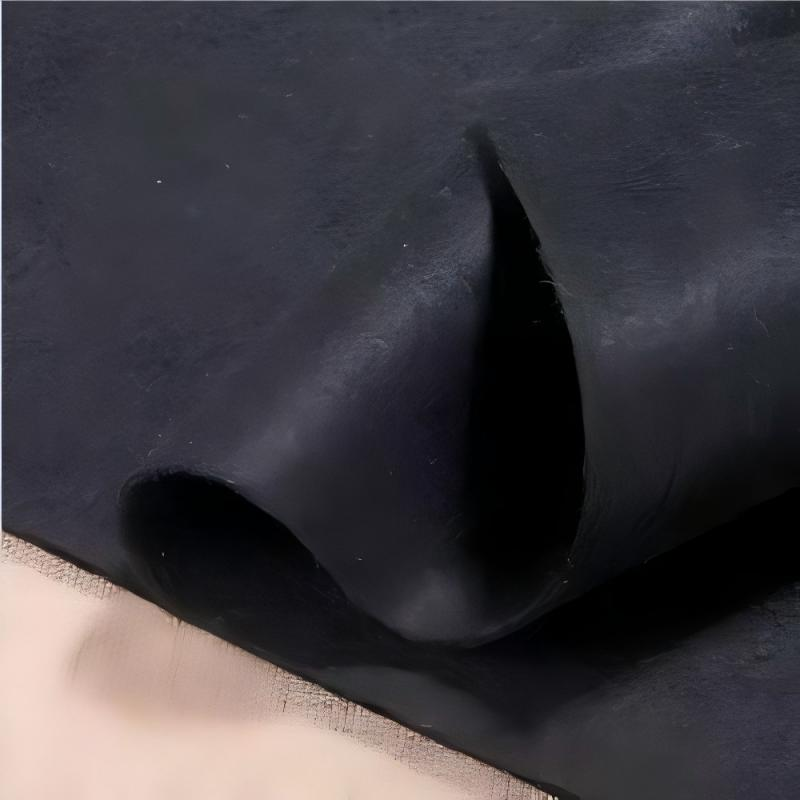
- PP Nonwoven Geotextile: Excellent chemical resistance, especially to acids and alkalis commonly found in leachate. Ideal for harsh chemical environments. For instance, Dalian GeoMax's black PP staple fiber nonwoven geotextile is a popular choice for aggressive conditions.
- PET Nonwoven Geotextile: Offers superior tensile strength, creep resistance, and UV stability. Perfect for applications requiring long-term load-bearing and exposure. Their PET continuous filament nonwoven geotextiles provide exceptional mechanical properties.
2. Mechanical Properties
- Tensile Strength: Must be sufficient to withstand stresses during installation and settlement.
- Puncture Resistance: Critical for cushion geotextiles protecting geomembranes.
- Elongation: Should be compatible with subgrade movement.
Dalian GeoMax's products, like the GLSV1100 (1100gsm) used in the Great Southern Landfill project, are engineered to exceed standard requirements for these properties.
3. Hydraulic Properties
- Permittivity & Permeability: Ensure adequate water flow for drainage layers without soil particle loss.
- Apparent Opening Size (AOS): Controls soil retention while allowing water passage.
4. Durability and Environmental Resistance
Landfills have lifespans of decades. Durability is non-negotiable.
- Anti-UV Geotextile: For temporary exposure during construction, UV-stabilized polymers are essential to prevent degradation.
- Chemical Resistance: As mentioned, PP offers broad-spectrum chemical resilience.
- Installation Damage Resistance: The fabric must survive placement and compaction of overlying materials.
Specialized Geotextile Solutions for Complex Challenges
Modern landfills often face unique challenges requiring bespoke solutions. This is where the expertise of an innovative Chinese geotextile supplier like Dalian GeoMax shines.
Wicking Geotextile
Used in cover systems to enhance moisture distribution and reduce differential settlement. It helps manage pore water pressure within the soil cover.
Conductive Geotextile
Integrates conductive filaments for leak detection surveys in liner systems, allowing for precise location of geomembrane breaches.
Custom Color and Branding
Project identification and quality control are simplified with Orange geotextile or other colored variants. Furthermore, Logo Inkjet coding geotextile allows for direct printing of project names, lot numbers, or company logos onto the fabric surface, ensuring traceability and brand visibility on-site.
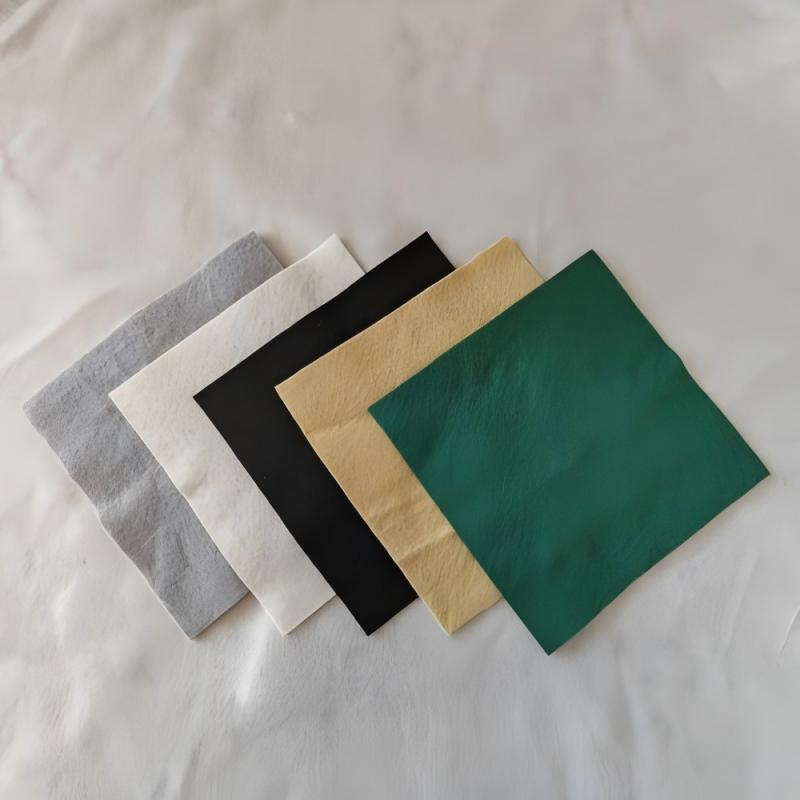
A range of colored geotextiles, including orange, for easy layer identification and project specification compliance.
A Practical Framework for Selection
Follow this step-by-step approach to narrow down your choices:
- Define the Function: Is it for separation, filtration, protection, or drainage? Refer to project design drawings.
- Review Project Specifications: Identify the governing standards (ASTM, AS, etc.) and the minimum required property values (e.g., grab strength, puncture, permittivity).
- Assess Site Conditions: Consider subsoil type, leachate chemistry, required design life, and installation methods.
- Shortlist Product Types: Based on the above, decide between PP vs. PET, nonwoven vs. woven (though nonwoven is most common for landfills), and approximate weight range.
- Request Certified Test Data: Always ask suppliers for third-party test reports from accredited laboratories. Dalian GeoMax provides test reports from its sister company, Dalian IEC Testing Service Co., Ltd., which holds CNAS (ISO/IEC 17025) accreditation, ensuring global recognition of data.
- Evaluate Supplier Credentials: Check for relevant certifications (ISO 9001, 14001, 45001), project history, and technical support capability.
- Consider Logistics & Customization: Can the supplier provide mini roll sizes for repairs or small areas? Can they produce geotextile bag or sheet products for specific containment needs?
Why Partner with a Specialist Chinese Geotextile Manufacturer?
The global China geotextile plant landscape is competitive, but not all manufacturers possess the same depth of export and technical experience. Dalian GeoMax Synthetics Co., Ltd., operating under the brand G-Tex® GE, distinguishes itself through:
- Proven Global Track Record: Their materials have been successfully used in over 30 countries, including demanding projects in Australia (Shoal Bay Landfill, Meru Landfill), the USA, and Southeast Asia (Thilawa landfill project, Myanmar).
- Full-Range Production Capability: From light weight nonwoven geotextiles (≤100gsm) to heavy-duty nonwoven geotextiles (≥1200gsm), they control quality from raw material to finished roll.
- In-House R&D and Testing: With over 80 patents and a CNAS-accredited lab, they don't just sell products; they solve engineering problems. They can develop conductive geotextile or wicking geotextile solutions as needed.
- Rigorous Quality Assurance: Holding ISO 9001:2015, ISO 14001:2015, and ISO 45001:2018 certifications, their processes ensure consistent quality that meets German DIN, ASTM, AS, and GB/T standards.
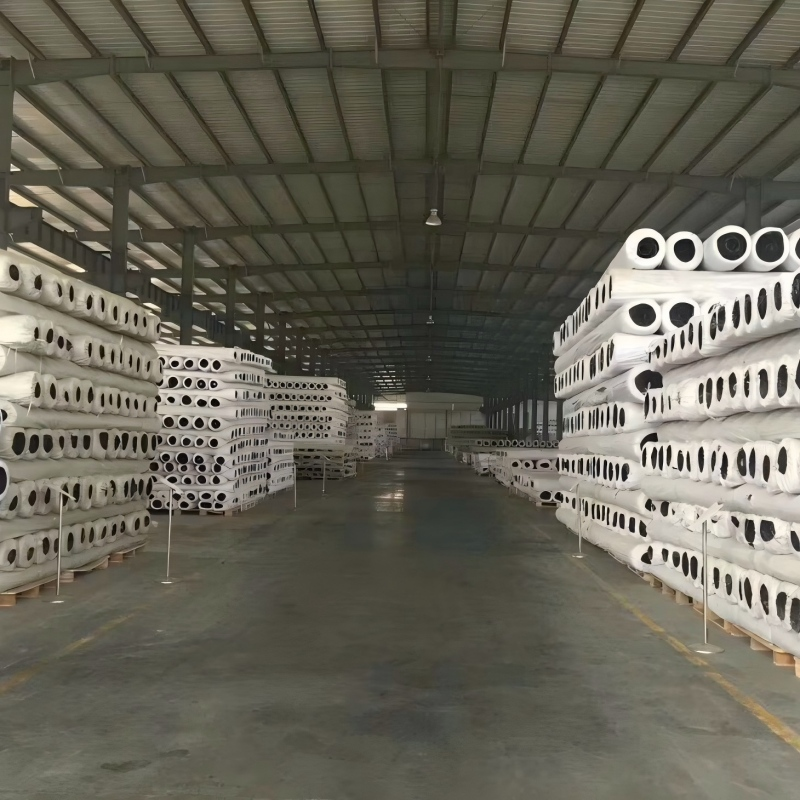
Organized warehouse of a professional Chinese geotextile manufacturer, ensuring ready supply for global projects.
Conclusion: An Investment in Long-Term Performance
Choosing the right geotextile is a technical decision with long-term financial and environmental implications. By focusing on function-driven specifications, verified material performance, and partnering with a certified and experienced Chinese geotextile manufacture like Dalian GeoMax Synthetics, project stakeholders can significantly de-risk their landfill construction.
For tailored advice, project-specific data sheets, or to discuss how their G-Tex® GE products can meet your landfill's unique requirements, contact their expert team.
Dalian GeoMax Synthetics Co.,Ltd.
Website: https://www.geotranstechnology.com
Email: enquiry@geo-textile.com
Phone/WhatsApp: +86 18698655505
Address: NO.8888-1 Southeastern Industrial Zone, Youjia, Ganjingzi District, Dalian, China.