How to Select the Right Geotextile for Your Landfill Project: A Comprehensive Guide
With global emphasis on environmental protection and sustainable waste management, modern landfill engineering demands high-performance, durable materials. Geotextiles, as a critical component, play multiple roles including separation, filtration, drainage, and reinforcement. For project managers and engineers, selecting the appropriate Chinese geotextile is paramount to ensuring long-term stability, regulatory compliance, and cost-effectiveness. This guide will walk you through the key considerations and steps to make an informed decision.
Understanding Landfill Geotextile Functions
In a typical landfill liner or capping system, geotextile fabrics are not just simple separators. They perform specific functions:
- Separation: Prevents the mixing of different soil layers (e.g., protective soil and drainage gravel) or the geomembrane and surrounding materials. A separation geotextile like a PP nonwoven geotextile is often used here.
- Cushion/Protection: Shields the delicate geomembrane liner from puncture by sharp objects in the subgrade or drainage aggregate. This requires a thick, robust heavy-duty nonwoven geotextile.
- Filtration: Allows water (leachate) to pass through while preventing fine soil particles from migrating and clogging the drainage system.
- Drainage (Wicking): In some advanced designs, a specialized wicking geotextile is used to actively transport moisture away from critical areas, enhancing the system's hydraulic performance.
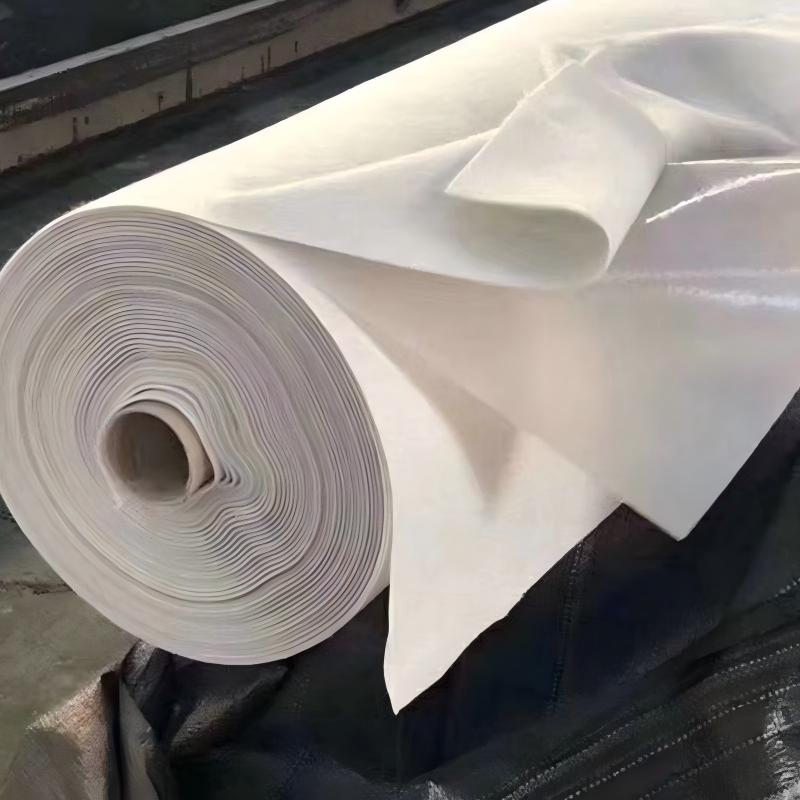
Composite geotextile-geomembrane materials are crucial for integrated landfill liner systems.
Step-by-Step Selection Criteria
1. Identify the Specific Application & Load Requirements
First, determine the exact role of the geotextile in your design. Is it primarily for cushioning, separation, or filtration? For instance, in the Shoal Bay Landfill, Darwin project, Dalian GeoMax Synthetics supplied GLSV1200 (1200gsm) as a cushion layer and GE250 (250gsm) for separation. The required tensile strength, puncture resistance, and thickness will vary significantly. Heavy machinery traffic during installation and waste placement demands high strength, often met by PET Continuous Filament Nonwoven Geotextiles or heavy staple fiber products.
2. Evaluate Environmental & Durability Factors
Landfill environments are harsh. Consider these factors:
- UV Exposure: For materials exposed before covering, an anti-UV geotextile is essential to prevent polymer degradation. Many suppliers, including leading Chinese geotextile manufacturers, add carbon black or UV stabilizers.
- Chemical Resistance: The geotextile must withstand exposure to leachate, which can be acidic or alkaline. Polypropylene (PP) and polyester (PET) offer excellent chemical resistance, but their suitability depends on pH levels.
- Long-Term Performance: The material must maintain its mechanical properties over decades. Look for products with a proven track record in similar projects.
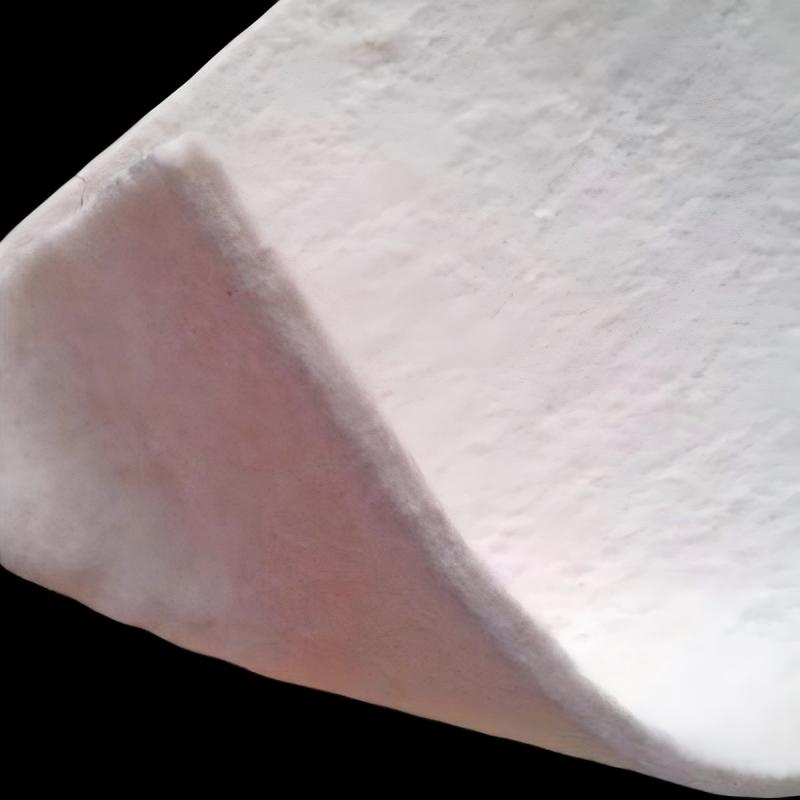
Heavy-duty geotextiles provide essential cushioning and protection for geomembranes in landfill bases.
3. Consider Logistical & Installation Needs
Ease of installation impacts project timelines and costs.
- Roll Size and Weight: Standard large rolls are efficient for open areas. For confined spaces or repair work, mini roll geotextiles are more manageable.
- Customization: For quality control and identification, a Logo Inkjet coding geotextile is invaluable. Suppliers like Dalian GeoMax can print project specs, logos, or lot numbers directly onto the fabric. High-visibility colors like Orange geotextile are also used for marking and safety.
- On-Site Support: Does the Chinese geotextile supplier offer technical guidance for installation? Experienced companies provide crucial support to ensure proper deployment.
4. Verify Compliance & Quality Assurance
Never compromise on certifications. The geotextile must meet or exceed the relevant national and international standards for your project location (e.g., ASTM, AS, GRI-GT, ISO). A reputable China geotextile plant will have robust quality control systems.
Dalian GeoMax Synthetics Co., Ltd., the force behind the G-Tex® GE brand, exemplifies this commitment. They hold ISO9001, ISO14001, and ISO45001 certifications, ensuring systematic management of quality, environment, and safety. Crucially, their affiliated lab, Dalian IEC Testing Service Co., Ltd., holds CNAS accreditation (China National Accreditation Service for Conformity Assessment). This means their test reports are internationally recognized, providing independent verification that products like their conductive geotextile or custom wicking geotextile meet specified performance claims.
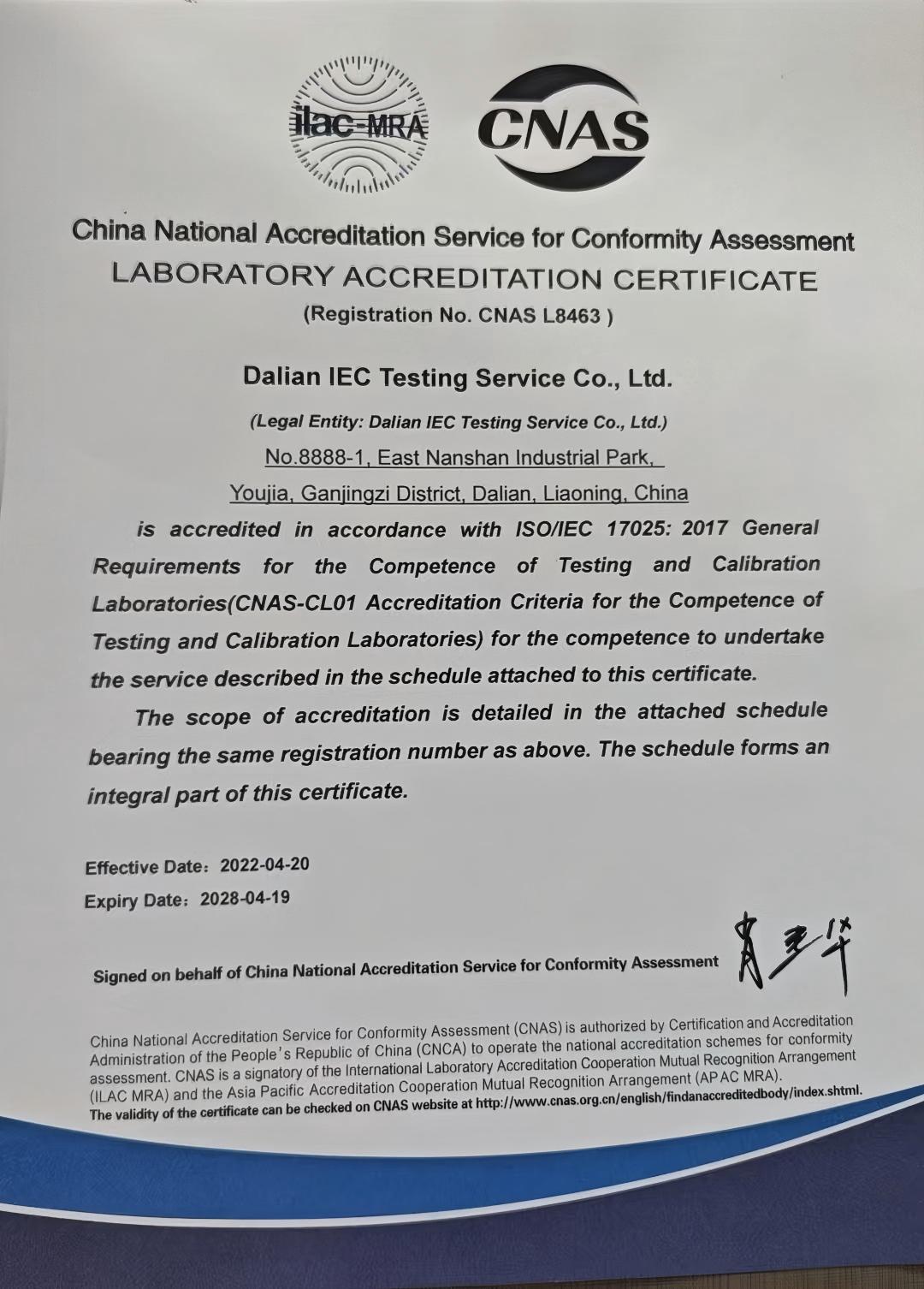
CNAS accreditation ensures international recognition of product test reports, a key marker of a supplier's credibility.
5. Analyze Cost vs. Value Over the Project Lifespan
While initial cost is a factor, the true value lies in the geotextile's performance over the landfill's operational and post-closure life (often 30+ years). A failure in the separation or cushion layer can lead to geomembrane damage, costly repairs, and environmental liability. Investing in a high-quality product from a trusted Chinese geotextile manufacture like Dalian GeoMax, which has a portfolio including projects like the Great Southern Landfill and Thilawa landfill project Myanmar, mitigates long-term risk.
Why Partner with a Specialist like Dalian GeoMax Synthetics?
Selecting a supplier is as important as selecting the material. Here’s what a specialist brings:
- Full Product Range: From light weight nonwoven geotextiles (≤100gsm) to heavy-duty ones (≥1200gsm), and specialized products like colored geotextile, anti-UV, and conductive geotextile.
- Customization Capability: They can produce geotextiles to meet specific ASTM, AS, or GB/T standards and create geotextile bag, tubular bag, or fabric sheet products for various applications.
- Proven Global Experience: As the first Chinese geotextile supplier focused on global exports, their products are used in over 30 countries across Americas, Oceania, and Asia.
- Integrated "Production, Sales, and Research": With their own CNAS-accredited lab, they control quality from raw material to finished product, offering unmatched technical support and problem-solving.
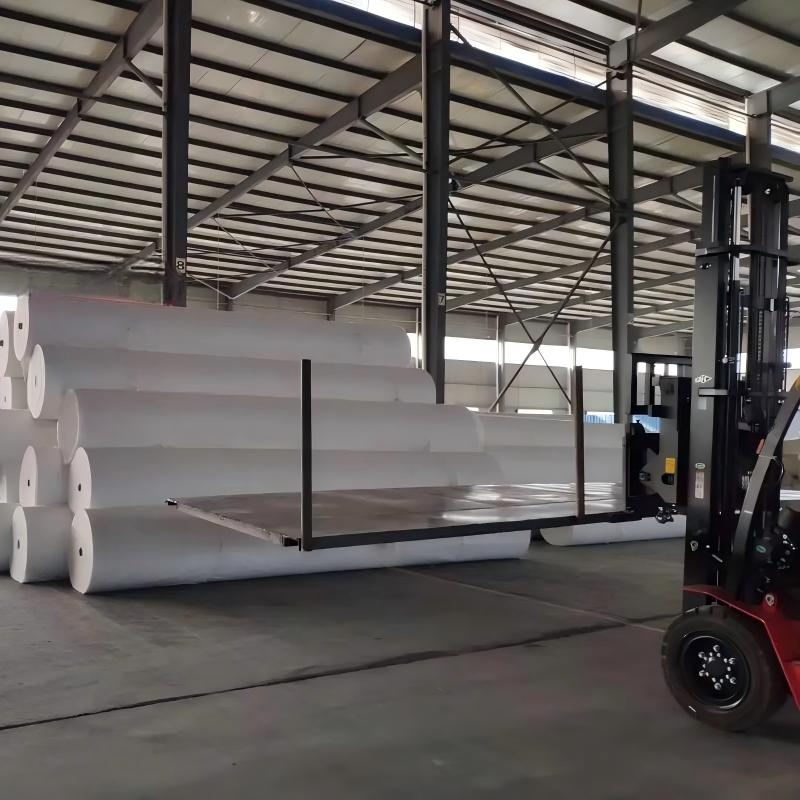
A well-organized warehouse ensures efficient logistics and delivery of geotextile products worldwide.
Conclusion
Choosing the right geotextile for a landfill is a technical decision with long-lasting consequences. By systematically evaluating the application, environmental conditions, standards compliance, and supplier capability, you can secure a solution that ensures project integrity. Partnering with an experienced and certified Chinese geotextile supplier such as Dalian GeoMax Synthetics Co.,Ltd. provides access to high-performance G-Tex® GE products, technical expertise, and the peace of mind that comes with proven global project success.
For a detailed consultation on your specific landfill project requirements, visit their website at https://www.geotranstechnology.com or contact their team directly.