
Geotextile Procurement: Avoid Risks & Source Efficiently from China
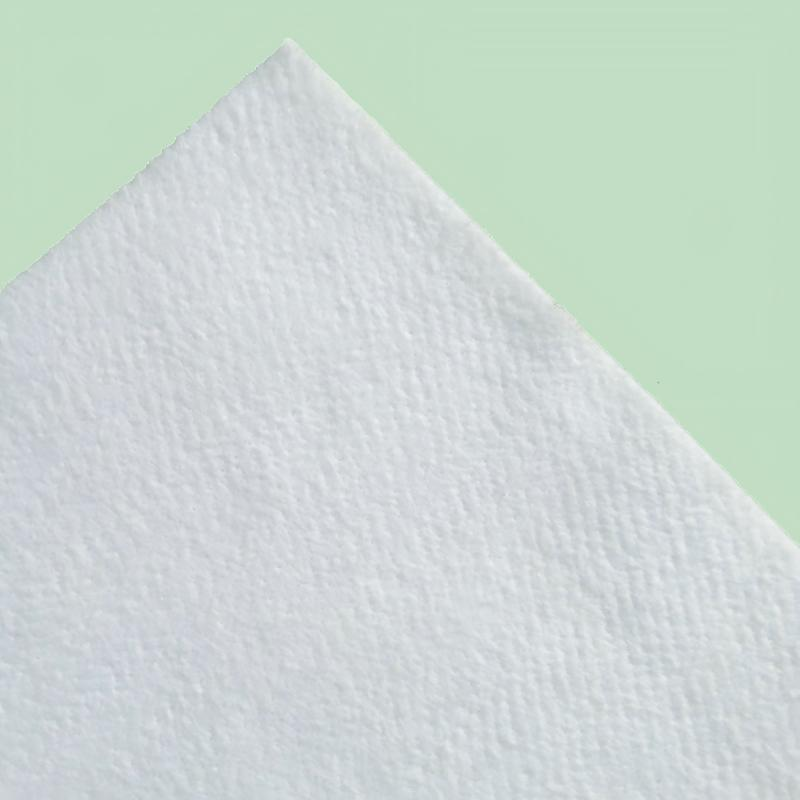
For global infrastructure buyers, sourcing high-quality geotextile from China offers cost advantages and manufacturing flexibility. However, without a systematic procurement framework, buyers face risks including inconsistent quality, delayed deliveries, hidden specification deviations, and intellectual property issues. This guide provides a step-by-step methodology to complete geotextile procurement efficiently while mitigating common sourcing risks, based on proven practices from industry specialists like Dalian GeoMax Synthetics Co., Ltd. (brand: G-Tex® GE).
What is Geotextile and Why Does Procurement Risk Exist?
Geotextile is a permeable fabric used in civil engineering for separation, filtration, drainage, reinforcement, and protection. It is typically made from polypropylene (PP) or polyester (PET) fibers, either continuous filament or staple fiber, bonded mechanically (needle-punched) or thermally. Chinese geotextile manufacturers have become major global suppliers due to their ability to produce a wide range of grades (from lightweight ≤100 gsm to heavy-duty ≥1200 gsm) at competitive prices. However, the market includes many small factories with inconsistent quality control, making supplier evaluation critical.
- Quality inconsistency – variability in tensile strength, puncture resistance, or UV stability.
- Non-compliance with standards – product may not meet ASTM, AS, DIN, or GB/T requirements.
- Hidden customization costs – special colors, logos (Logo Inkjet coding), or functional treatments (wicking, anti-UV, conductive) require proven capability.
- Delivery and logistics delays – especially for mini rolls, geobags, or folded sheets.
- Intellectual property risks – unsanctioned use of patented designs or technology.
Industry Background: The Rise of Chinese Geotextile Suppliers
China now hosts hundreds of geotextile plants, but only a few possess vertically integrated production lines, in-house testing labs, and international certifications. The China geotextile plant landscape ranges from small workshops to national high-tech enterprises. For example, Dalian GeoMax Synthetics Co., Ltd. (G-Tex® GE), founded in 2006, operates two short-fiber and one long-fiber needle-punched nonwoven geotextile production lines, and has obtained ISO9001, ISO14001, ISO45001 certifications. It is also a member of the International Geosynthetics Society and holds over 80 patents. Its subsidiary, Dalian IEC Testing Service Co., Ltd., is a CNAS-accredited laboratory (since April 2016) whose test reports are mutually recognized in more than 70 developed countries. Such capabilities dramatically reduce procurement risk.
How to Select a Reliable Chinese Geotextile Manufacture: A Detailed Solution
Step 1: Define Your Technical Requirements
Start by specifying the geotextile’s function: separation, cushion/protection, filtration, or wicking. Determine the required mass per unit area (gsm), tensile strength (MD/CMD), puncture resistance (CBR), UV resistance, and color. If your project demands wicking geotextile for drainage or anti-UV geotextile for exposed applications, these are specialized products that not every factory can produce. Also consider whether you need Orange geotextile or other colors for visibility, or Logo Inkjet coding geotextile for branding.
Step 2: Evaluate Supplier Certifications and Testing Capabilities
Request copies of ISO management system certificates and product-specific test reports. A reliable Chinese geotextile manufacturer should provide data from a third-party or in-house lab that follows international standards. For instance, Dalian GeoMax’s CNAS lab can issue reports using ILAC and APLAC mutual recognition marks. Verify that the product meets ASTM D4533, AS 3706, DIN EN ISO 10318, or GB/T 17639 as required.
| Certification / Standard | Relevance | Example Provider |
|---|---|---|
| ISO 9001:2015 | Quality management system | Dalian GeoMax (WSF certified) |
| ISO 14001:2015 | Environmental management | Dalian GeoMax |
| ISO 45001:2018 | Occupational health & safety | Dalian GeoMax |
| CNAS (China National Accreditation) | Laboratory competence (ISO/IEC 17025) | Dalian IEC Testing Service Co., Ltd. |
| ASTM / AS / DIN / GB/T | Product performance standards | Multiple, verified by test reports |
Step 3: Request Customization Samples and Verify Production Capacity
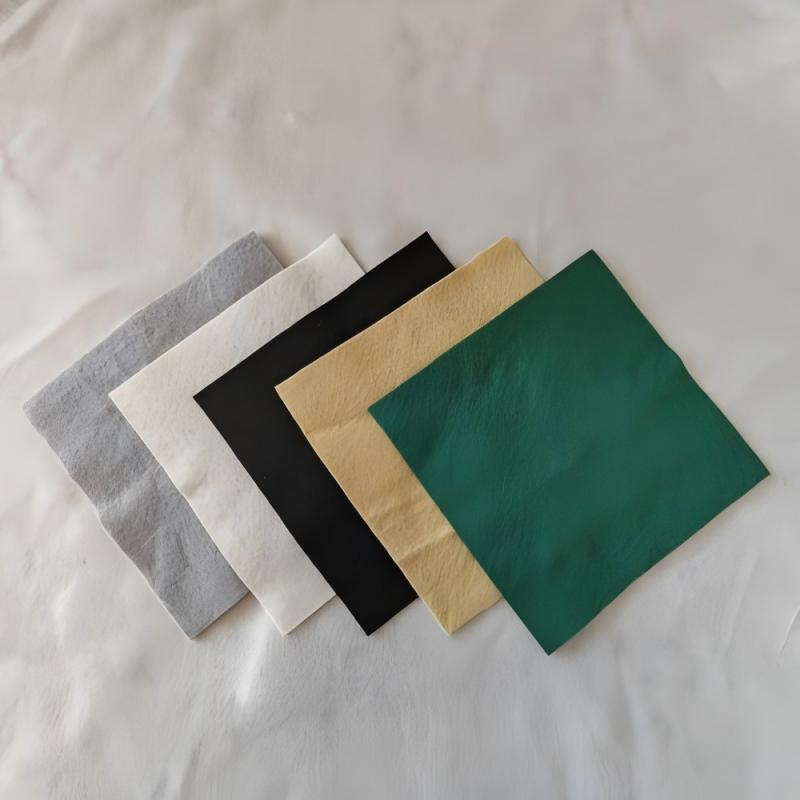
For customized geotextile (colored, conductive, printed logos), ask for samples that match your specification exactly. A proven China geotextile plant can demonstrate capability: Dalian GeoMax produces everything from lightweight (≤100 gsm) to heavy-duty (≥1200 gsm) and offers color options like orange, red, gray, and green. They can also produce mini rolls, geobags, tubular bags, and fabric sheets. Their two short-fiber lines and one long-fiber line ensure stable supply. Ask for lead time and minimum order quantities per specification.
Step 4: Conduct Factory Audit or Review Production Evidence
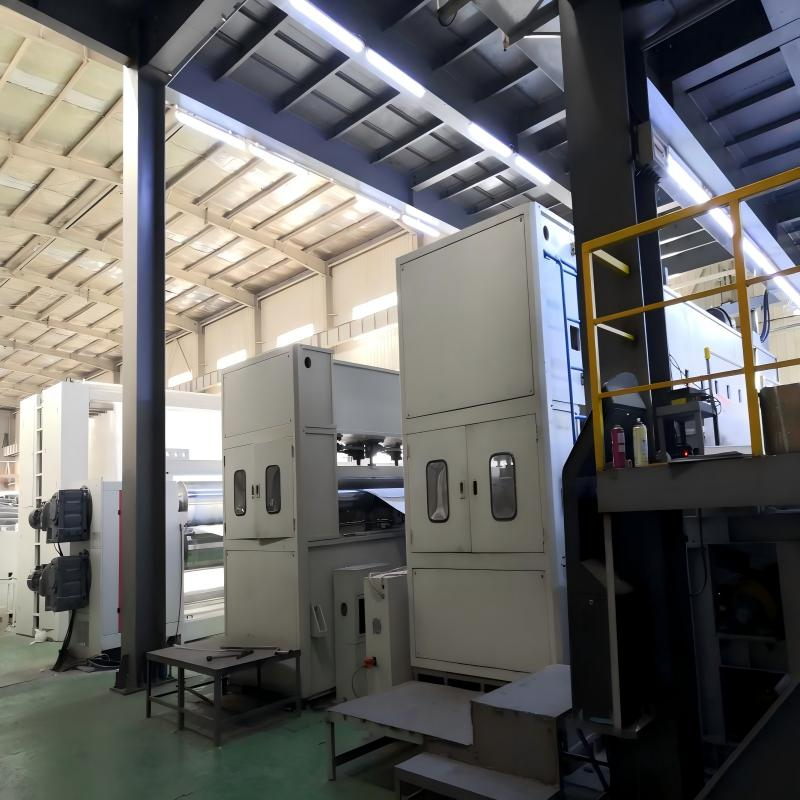
If possible, arrange a virtual or on-site audit of the Chinese geotextile manufacture’s facility. Check raw material quality (virgin PET vs recycled), needle-punching machine condition, and quality control points. For example, Dalian GeoMax’s production line images show a clean, organized environment with heat-treating machines and controlled rolling. Request video of the production line, warehouse (finished products in stock), and quality testing lab.
Step 5: Review Project References and Case Studies
Ask for a list of completed projects, especially those similar to yours. A reliable supplier will provide details: project name, location, product type, quantity, and duration. Dalian GeoMax has supplied geotextiles to major landfill projects worldwide, such as:
- Millar Rd Landfill (Cap 12 & 13) – 95,000 m² of GLP540
- Allawuna Farm Landfill (Cells 1 & 2) – 80,000 m² cushion GLSV1100 + 80,000 m² separation GE250
- Shoal Bay Landfill, Darwin – 38,000 m² cushion + 30,640 m² separation
- Thilawa Landfill, Myanmar – 51,200 m² each of GLSV500 and GLSV1000
These references demonstrate the supplier’s ability to meet large-volume, technically demanding orders across different climates and regulations.
Step-by-Step Procurement Process for Industrial Buyers
- Compile a detailed Request for Information (RFI): Include product type (e.g., PP nonwoven geotextile or PET staple fiber), gsm range, roll width/length, color, printing requirements, packaging (mini rolls, sheets, bags), and target standards.
- Shortlist minimum 3 suppliers based on certifications (ISO, CNAS) and product range. Prioritize those with published factory images and case studies.
- Request pre-shipment sample testing by an independent lab (or the supplier’s CNAS lab) with full test report. Verify key parameters: tensile strength, elongation, puncture resistance, UV resistance (if required), and mass per unit area.
- Negotiate contract terms covering delivery lead time, payment terms (e.g., 30% deposit, 70% against BL), penalty clauses for delay, and quality warranty.
- Arrange third-party inspection before shipment. Many buyers use SGS, Bureau Veritas, or the supplier’s own CNAS lab for batch release.
- Plan logistics – confirm container loading (20 GP or 40 HQ), shipping marks, and documentation (certificate of origin, packing list, invoice, test reports).
Use Case: Successful Large-Scale Geotextile Sourcing from China
A European environmental contractor needed 150,000 m² of anti-UV geotextile for a landfill cap in Southeast Asia. They approached Dalian GeoMax because of the supplier’s proven track record in similar landfill projects (e.g., Thilawa Landfill) and its in-house CNAS lab. The buyer specified:
- PET staple fiber nonwoven, 540 gsm, UV-stabilized (UV resistance > 80% after 500 hours)
- Orange color for visual detection
- Logo Inkjet coding with buyer’s brand name and project code
- Packaging in 2.0 m width × 50 m length rolls
The supplier provided samples within 10 days, accompanied by a full CNAS test report. After approval, production was completed in 45 days, with a third-party inspection confirming compliance. The buyer mitigated risk by using the supplier’s conductive geotextile expertise to integrate a static-dissipative layer for electronic monitoring. The project was completed on time, and the geotextile performed flawlessly during the first monsoon season.
Frequently Asked Questions (FAQ)
A: It varies. For standard black/white geotextile, MOQ can be as low as 5,000 m². For special colors (Orange, green, gray) or printed designs (Logo Inkjet coding), MOQ may be 10,000–30,000 m². Dalian GeoMax offers flexible MOQ for trial orders, especially for new clients.
A: Ask the supplier to provide test reports from an accredited lab (ISO/IEC 17025). If the supplier has a CNAS lab like Dalian IEC Testing Service, the report will include ILAC/APLAC marks accepted by 70+ countries. You can also arrange a pre-shipment inspection by an independent agency.
A: Chinese manufacturers often offer lower unit costs, shorter lead times due to larger production capacity, and greater customization flexibility (colors, printing, cutting, bagging). However, rigorous supplier qualification is necessary to avoid quality pitfalls. Established exporters like Dalian GeoMax combine cost advantages with international certification.
A: Yes, provided the supplier has proven technical know-how. For example, Dalian GeoMax holds patents for customized geosynthetics and has supplied wicking and conductive geotextiles to clients globally. Request case studies and patent certificates.
Conclusion: Efficient and Low-Risk Geotextile Procurement is Achievable
By following a structured procurement process—defining specifications, verifying certifications, auditing production, reviewing references, and arranging independent testing—buyers can source geotextile fabrics from China with confidence. Partnering with a vertically integrated, certified supplier like G-Tex® GE (Dalian GeoMax Synthetics Co., Ltd.) reduces risk while delivering cost and customization advantages. Their combination of ISO management systems, CNAS lab, multiple production lines, and extensive landfill project experience exemplifies the supplier profile that procurement professionals should target.
Ready to start your geotextile procurement with a trusted Chinese manufacturer?
Contact Dalian GeoMax Synthetics Co., Ltd. today for a customized quotation:
Phone/WhatsApp: +86 186 9865 5505
Email: enquiry@geo-textile.com
Visit: www.geotranstechnology.com
Address: NO.8888-1 Southeastern Industrial Zone, Youjia, Ganjingzi District, Dalian, China
Have Questions or Need More Details?
Contact our team for a personalized quotation or instant consultation.
Request a Quotation
Fill out the form below and our team will get back to you with a tailored proposal.
WhatsApp Direct Chat
Prefer to chat in real-time? Message us on WhatsApp for instant assistance & quick answers.
- Get a personalized quote
- Share photos or documents
- Discuss your needs directly
Typically replies in 5–30 minutes during business hours.