Introduction: The Critical Role of Geotextiles in Modern Landfill Engineering
With the global push for sustainable waste management and stringent environmental regulations, the design and construction of modern landfills have become highly sophisticated engineering endeavors. At the heart of these systems lies a crucial component: the geotextile. These engineered fabrics perform vital functions such as separation, filtration, drainage, and protection of geomembrane liners. Selecting the correct nonwoven geotextile is not merely a procurement decision; it is a fundamental engineering choice that impacts the long-term integrity, environmental safety, and cost-effectiveness of the entire landfill cell. This guide will walk you through the key technical considerations, material properties, and application-specific factors to ensure you specify the optimal Chinese geotextile for your next landfill project.
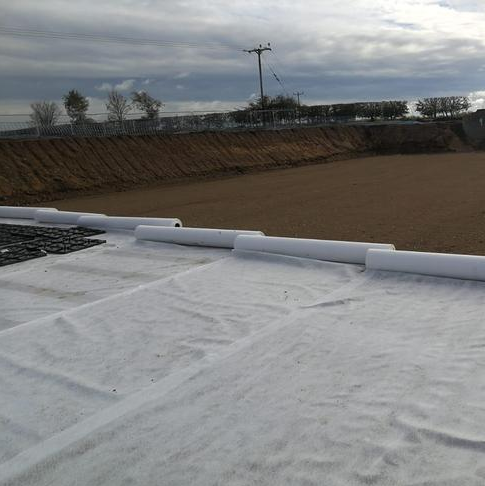
Polyester filament needle-punched geotextile being deployed in a landfill lining system, showcasing its robustness.
Step 1: Define the Primary Function Within the Landfill System
The first step is to identify the specific role the geotextile will play. This determines the required physical and mechanical properties.
- Cushion/Protection Geotextile: Placed above and below the geomembrane to protect it from puncture by sharp aggregates or uneven subgrade. This role demands high puncture resistance (CBR) and tensile strength. Products like heavy-duty nonwoven geotextiles (e.g., 800gsm to 1200gsm) are typical. For instance, in the Shoal Bay Landfill project, Dalian GeoMax Synthetics supplied GLSV1200 (1200gsm) cushion geotextile for precisely this purpose.
- Separation Geotextile: Used to prevent the mixing of different soil layers (e.g., drainage layer and compacted clay liner). It requires good filtration characteristics and survivability during installation. Lighter weight PP nonwoven geotextile or PET geotextiles in the 200-400gsm range are common, such as the GE250 (250gsm) used in the Allawuna Farm Landfill project.
- Drainage/Transmissivity Layer: While often a geonet composite, a thick nonwoven geotextile can also facilitate lateral drainage. This requires high in-plane flow capacity (transmissivity).
Step 2: Select the Right Polymer and Manufacturing Process
The choice between Polypropylene (PP) and Polyester (PET) is critical and depends on the chemical environment and required longevity.
Polypropylene (PP) Nonwoven Geotextile:
Advantages: Excellent chemical resistance to a wide range of leachates, acids, and alkalis. Generally more cost-effective for standard applications.
Considerations: Susceptible to UV degradation if exposed for prolonged periods without stabilization. Ideal for primary separation layers within the landfill body.
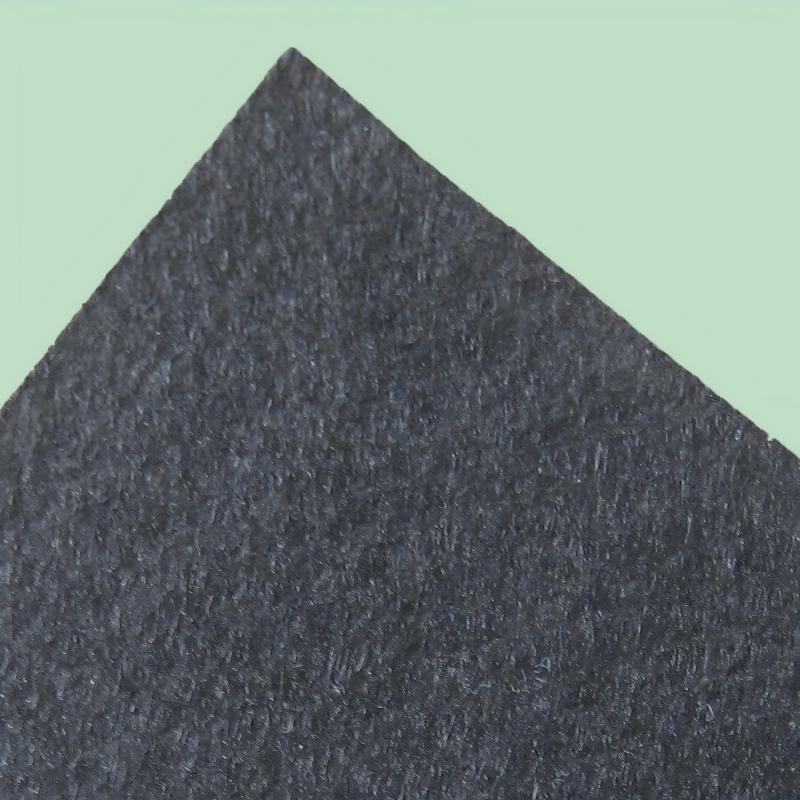
Black PP staple fiber geotextile, often chosen for its chemical resistance in landfill environments.
Polyester (PET) Nonwoven Geotextile:
Advantages: Superior tensile strength and creep resistance under load. Excellent long-term performance in damp, neutral to slightly acidic conditions. Often preferred for heavy-duty cushion applications where high sustained loads are expected.
Considerations: Can be vulnerable to hydrolysis in highly alkaline environments (pH > 10). For critical, long-term projects like landfill caps and base liners, PET continuous filament needle-punched geotextiles from a reputable China geotextile plant like Dalian GeoMax offer exceptional durability and consistent properties.
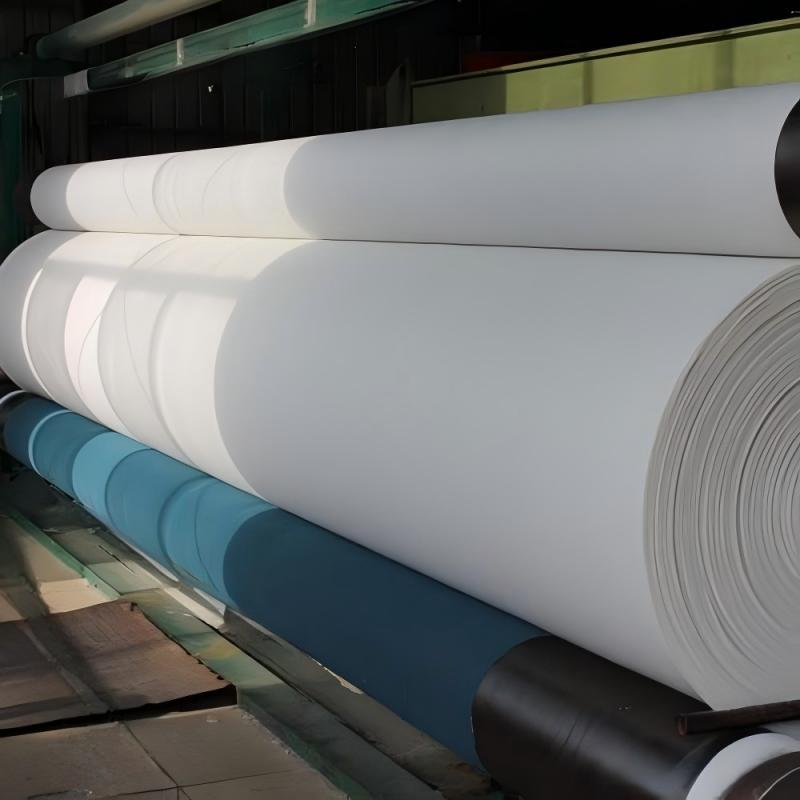
PET continuous filament geotextiles provide high tensile strength and uniformity for demanding applications.
Manufacturing Note: Needle-punched nonwoven is the standard process for landfill geotextiles due to its excellent mechanical interlocking and thickness, which enhances cushioning and drainage potential.
Step 3: Specify Key Physical and Mechanical Properties
Base your specification on relevant international standards (ASTM, ISO, AS) and project-specific design requirements. Here is a simplified reference table:
| Property (Standard Test Method) | Typical Range for Cushion Geotextile | Typical Range for Separation Geotextile | Why It Matters |
|---|---|---|---|
| Mass Per Unit Area (ASTM D5261) | 800 - 1200 g/m² | 200 - 400 g/m² | Indicates general robustness; correlates with many strength properties. |
| Tensile Strength (ASTM D4632) | 30 - 60 kN/m | 8 - 15 kN/m | Resists stresses during installation and settlement. |
| CBR Puncture Resistance (ASTM D6241) | 4000 - 8000 N | 1000 - 2000 N | Critical for cushion - protects geomembrane from puncture. |
| Apparent Opening Size (AOS) (ASTM D4751) | 0.15 - 0.25 mm | 0.07 - 0.15 mm | Controls soil retention while allowing water passage (filtration). |
| Permittivity (ASTM D4491) | 0.5 - 2.0 sec⁻¹ | 1.0 - 3.0 sec⁻¹ | Measures cross-plane water flow capacity. |
Note: These are indicative values. Always consult with your geotechnical engineer and the Chinese geotextile manufacturer for project-specific values. A supplier like Dalian GeoMax Synthetics can provide certified test data from their in-house CNAS-accredited lab, Dalian IEC Testing Service Co., Ltd., ensuring traceable and reliable performance data.
Step 4: Consider Specialized and Customized Requirements
Modern landfill projects often demand more than standard off-the-shelf products. Partnering with a supplier capable of customization is a significant advantage.
- Anti-UV Geotextile: Essential for components that will be exposed to sunlight for weeks or months before being covered. Contains UV stabilizers to maintain strength.
- Wicking Geotextile: A specialized fabric designed to actively draw moisture out of fine-grained soils, enhancing stability in certain cap or cover designs.
- Orange Geotextile or Other Colored Variants: High-visibility colors like orange are used for marking, safety, or to differentiate between different functional layers in complex multi-layer systems. This prevents installation errors.
- Logo Inkjet Coding Geotextile: For quality control and traceability, the geotextile surface can be directly printed with the project name, lot number, or manufacturer details. This is a valuable service offered by advanced suppliers.
- Conductive Geotextile: Used in conjunction with electrical leak location surveys (ELLS) for geomembrane liners. It facilitates the detection of holes or defects in the primary liner after installation.
- Reprocessed Forms: For smaller repairs or specific applications, geotextile bags, mini rolls, or pre-cut sheets (geotextile fabrics in sheet form) offer great convenience.
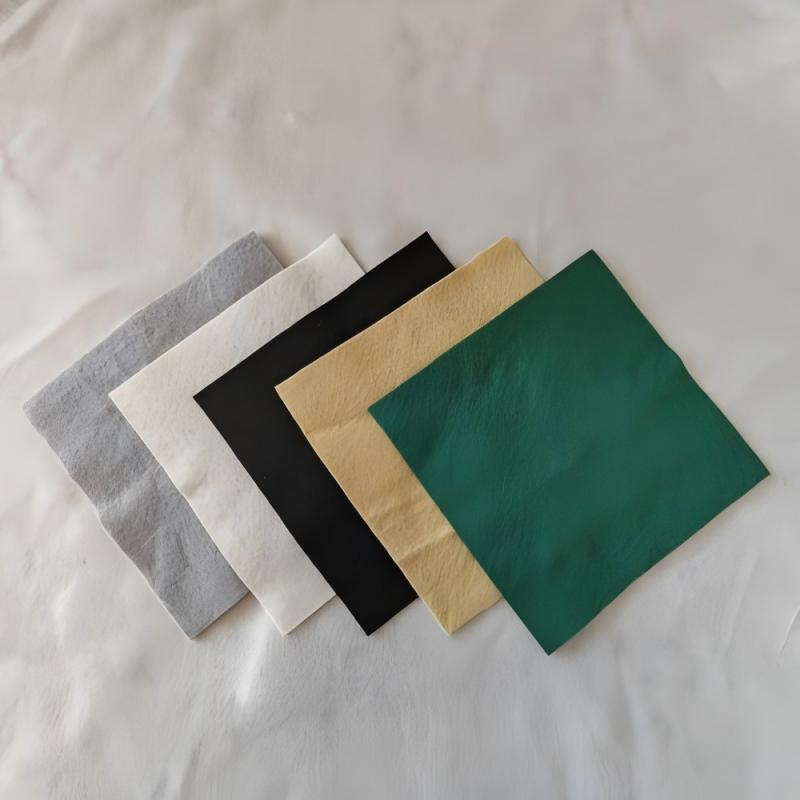
A range of colored geotextiles, including high-visibility orange, for layer identification and project specification.
Step 5: Vet Your Supplier's Technical Capabilities and Project History
The quality of the geotextile is inseparable from the expertise of the Chinese geotextile supplier. Due diligence here mitigates project risk.
Why Dalian GeoMax Synthetics Co., Ltd. (G-Tex® GE) Stands Out:
As a case study in supplier selection, consider the credentials of Dalian GeoMax Synthetics, a leading Chinese geotextile manufacture expert.
- Proven Project Portfolio: Direct involvement in over a dozen major international landfill projects (e.g., Shoal Bay, Red Hill, Meru, Thilawa) supplying millions of square meters of geotextile. This demonstrates real-world experience with the demands of landfill engineering.
- Integrated Quality Assurance: They operate Dalian IEC Testing Service Co., Ltd., a CNAS-accredited laboratory (Certificate No. L16734). This means every batch of G-Tex® GE product can be tested to ASTM, AS, or ISO standards, with reports recognized internationally.
- Comprehensive Certifications: The company holds ISO9001:2015 ISO14001:2015 ISO45001:2018 and is recognized as a National High-Tech Enterprise, reflecting a systematic approach to quality, environment, and safety.
- Full Customization Capacity: From light weight nonwoven geotextiles to ultra-heavy-duty variants, and all specialized types (anti-UV, wicking, conductive, colored), they engineer to specification.
- Global Compliance: Their products are designed to meet German DIN, International ISO, American ASTM, Australian AS, and Chinese GB/T standards, making them suitable for projects anywhere in the world.
Contact them for technical data sheets and project consultation: Phone/WhatsApp: +86 18698655505 | Email: enquiry@geo-textile.com | Website: https://www.geotranstechnology.com.
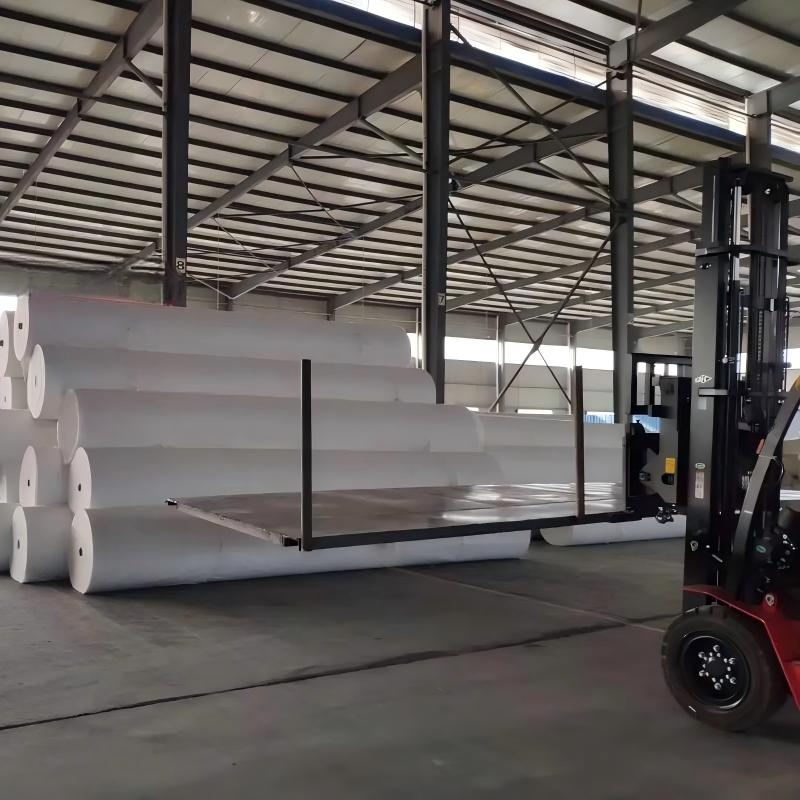
Organized warehouse of a professional Chinese geotextile plant, ensuring efficient logistics and stock management.
Conclusion: A Methodical Approach Ensures Long-Term Success
Selecting the right geotextile for a landfill is a multi-faceted process that balances function, material science, empirical data, and supplier reliability. By systematically defining the role, choosing the appropriate polymer, specifying against key standards, considering advanced customizations, and partnering with a technically proficient Chinese geotextile manufacturer like Dalian GeoMax Synthetics, project engineers and procurement managers can significantly de-risk their projects. The correct nonwoven geotextile is a relatively small investment that safeguards the multi-million-dollar integrity of the landfill containment system, protects the environment, and ensures regulatory compliance for decades to come.
For your next project, move beyond basic commodity sourcing. Engage in a technical dialogue with your supplier. Request project-specific test reports from an accredited lab. Review their past project lists. This level of diligence is what separates a successful, durable landfill construction from one fraught with future remedial costs.