Selecting the right geotextile supplier is a critical decision for procurement managers, engineers, and project owners in the civil engineering, environmental, and construction sectors. The quality, consistency, and technical support behind geosynthetic products directly impact project longevity, safety, and cost-effectiveness. With numerous Chinese geotextile manufacturers in the market, a structured evaluation framework is essential. This guide outlines key criteria to help you identify a capable and reliable partner for your geotextile fabrics needs.
1. Core Manufacturing Capabilities and Product Range
A supplier's production capacity reflects its ability to meet diverse project demands. Assess the following:
- Product Spectrum: Can they supply from lightweight (≤100gsm) to heavy-duty (≥1200gsm) PP nonwoven geotextile and PET-based products? A broad range indicates flexibility.
- Specialization & Customization: Look for expertise in functional variants like wicking geotextile, anti-UV geotextile, conductive geotextile, and Orange geotextile for high-visibility applications. The ability to provide Logo Inkjet coding geotextile is a sign of attention to client branding and traceability.
- Fabrication Services: In-house capabilities to produce geotextile bag, mini rolls, and custom sheets add significant value, reducing lead times and ensuring quality control.
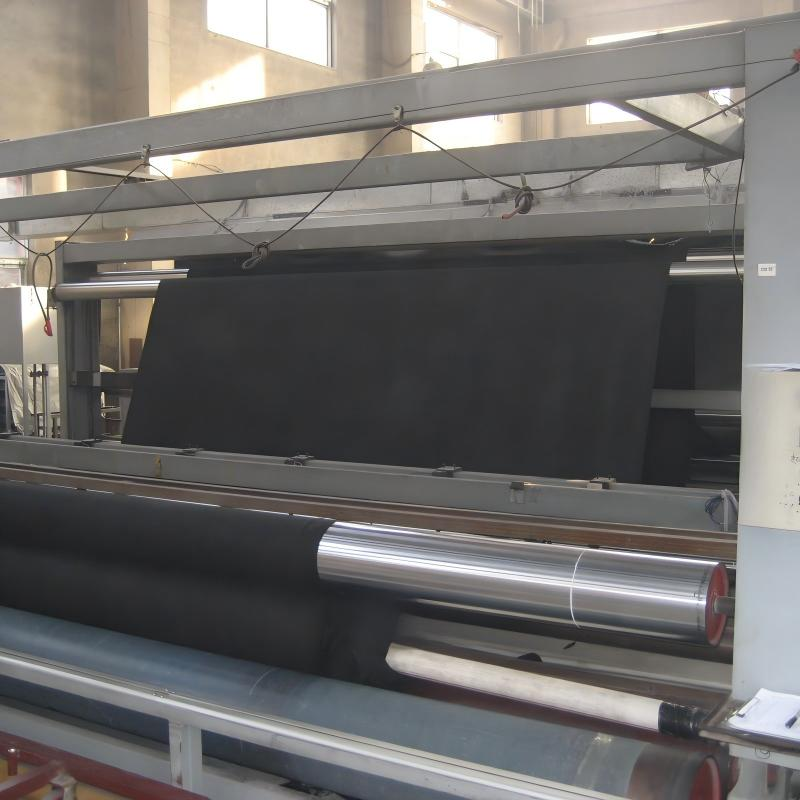
Modern production lines are essential for consistent geotextile quality.
2. Technical Compliance and Quality Assurance
Adherence to international standards is non-negotiable for global projects. A credible supplier should demonstrate:
- Standard Compliance: Products should meet or exceed relevant standards such as ASTM (US), AS (Australia), ISO, DIN (Germany), and GB/T (China).
- Independent Testing: Prefer suppliers with access to accredited laboratory services for unbiased product verification. For instance, Dalian GeoMax Synthetics Co.,Ltd. operates Dalian IEC Testing Service Co.,Ltd., a CNAS-accredited lab (Certificate No. L16734), ensuring test reports are recognized across over 70 countries.
- Certifications: Look for ISO 9001 (Quality Management), ISO 14001 (Environmental Management), and ISO 45001 (Occupational Health & Safety) certifications as a baseline for systematic operational control.
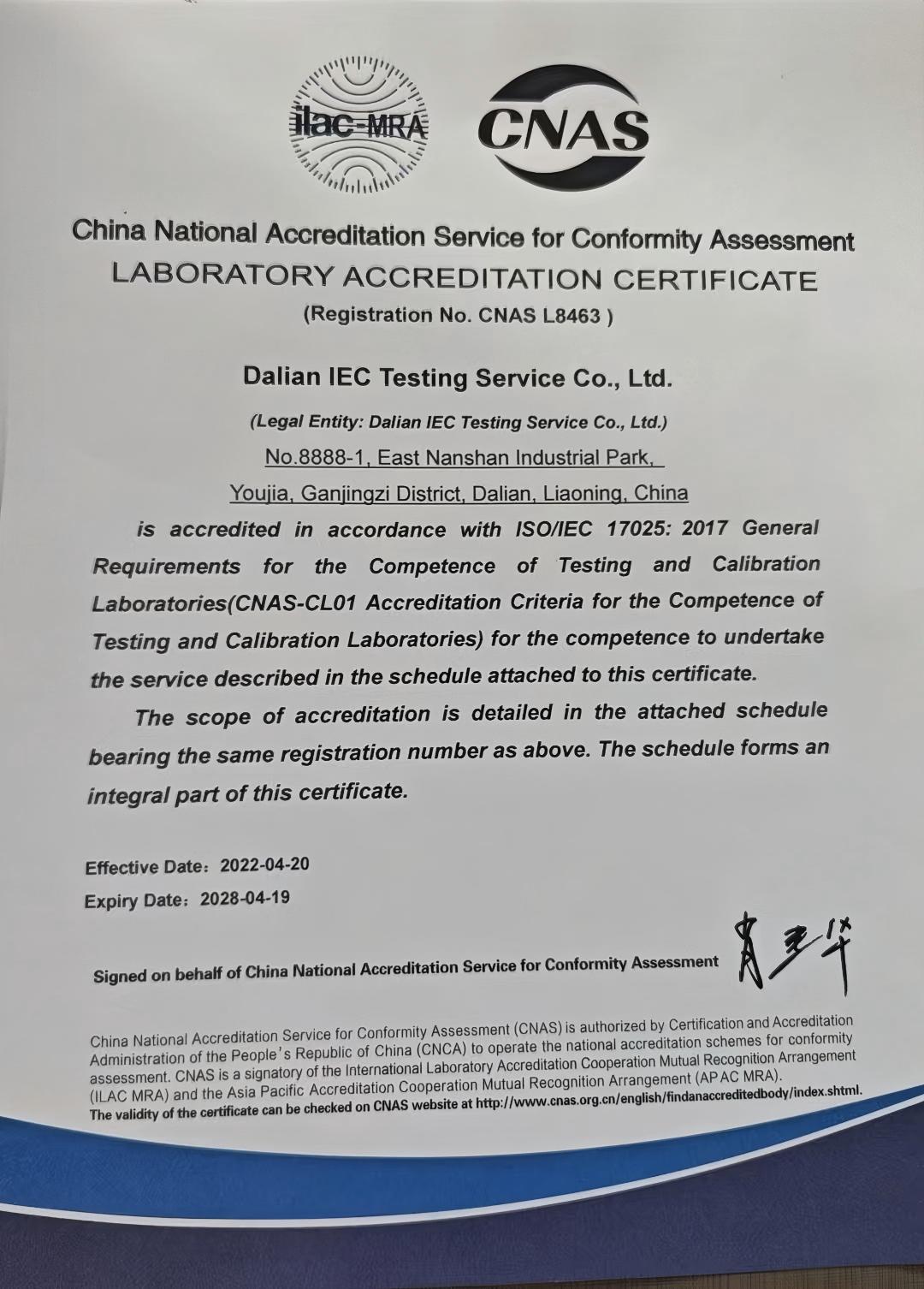
CNAS Laboratory Accreditation
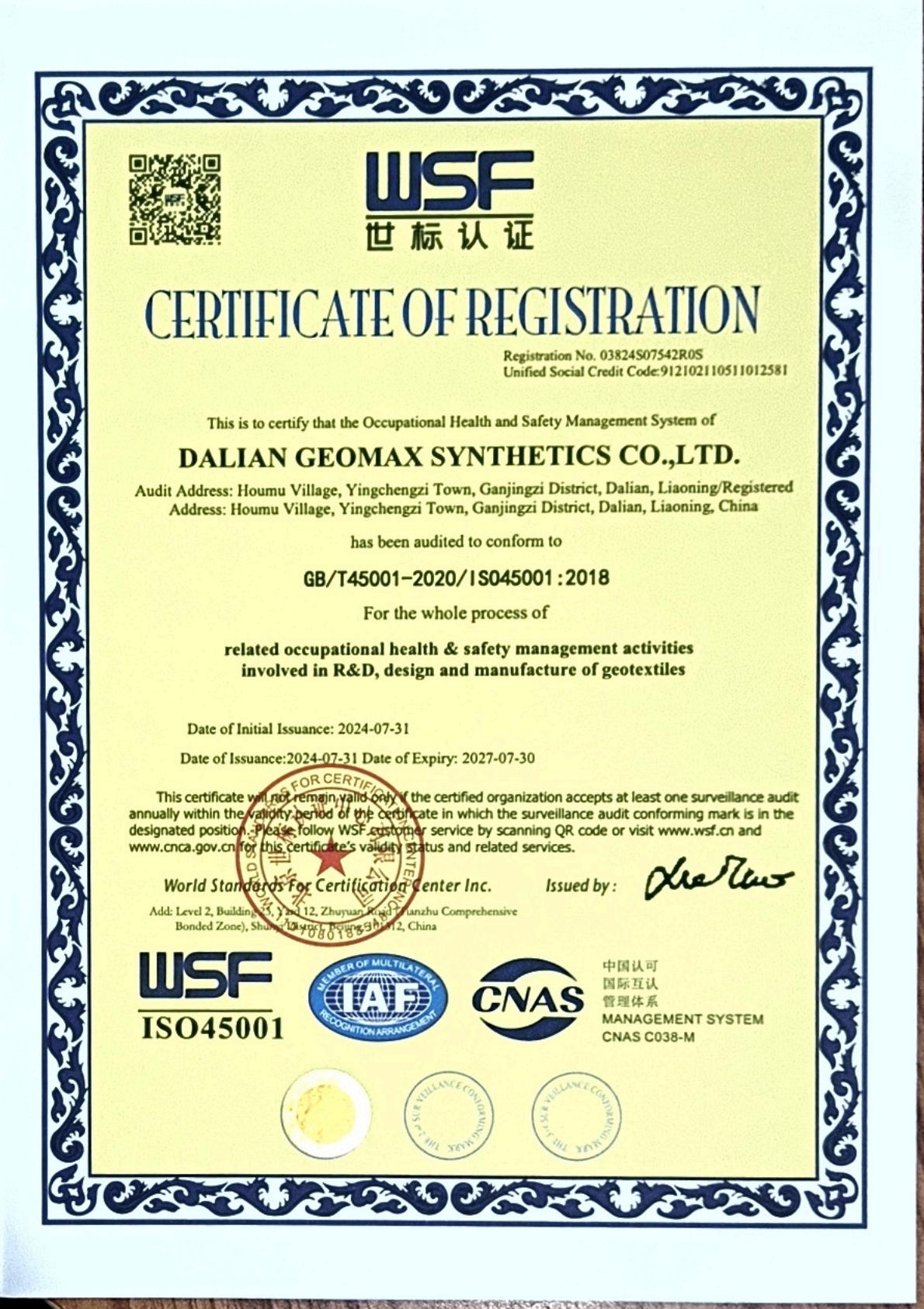
ISO 9001:2015
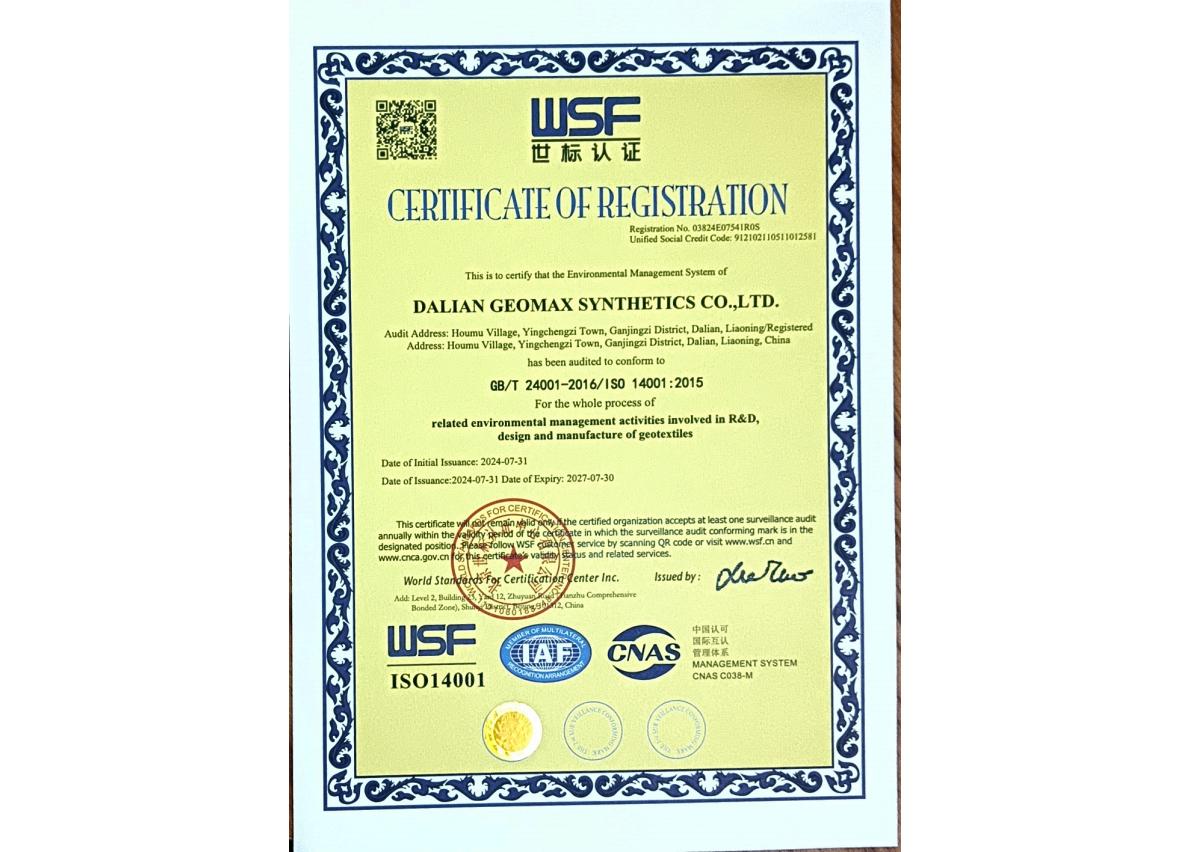
ISO 14001:2015
3. Proven Project Experience and Global Reach
Track record matters. Evaluate the supplier's portfolio:
- Reference Projects: Request case studies from similar applications (e.g., landfill lining, road construction, erosion control). A supplier with experience in demanding projects like the Shoal Bay Landfill in Darwin (supplying over 68,000m² of geotextiles) or the Thilawa landfill in Myanmar demonstrates capability.
- Export History: A supplier that successfully exports to developed markets (e.g., Australia, USA, Canada, Germany) is likely familiar with stringent quality and documentation requirements.
- Industry Affiliation: Membership in bodies like the International Geosynthetics Society (IGS) signals a commitment to industry best practices and continuous learning.
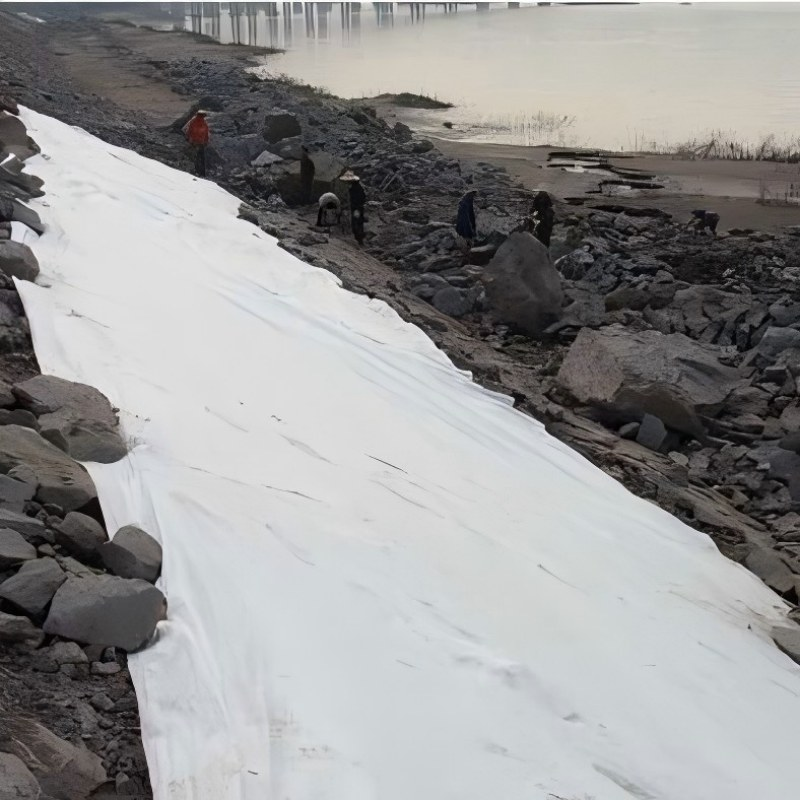
Geotextiles in application for erosion control and stabilization.
Supplier in Focus: Dalian GeoMax Synthetics Co.,Ltd. (Brand: G-Tex® GE)
As an illustration of the criteria above, consider Dalian GeoMax Synthetics Co.,Ltd., a specialized Chinese geotextile supplier established in 2006. The company serves as a practical benchmark:
- Comprehensive Portfolio: Offers a full range from light to ultra-heavyweight geotextiles, including specialized Chinese geotextile manufacture of colored, conductive, and wicking variants.
- Technical Integration: Uniquely combines manufacturing with its own CNAS-accredited testing lab (Dalian IEC Testing Service), providing a closed-loop quality assurance system from their China geotextile plant.
- Global Compliance: Products are engineered to meet ASTM, AS, ISO, and DIN standards, backed by full ISO management system certifications.
- Project Credentials: Has supplied geosynthetics for over a dozen major landfill projects across Australia and Asia, alongside highway, railway, and water conservancy works.
Their approach exemplifies the "production, sales, and research" integration that marks a mature technical supplier.
4. Procurement Evaluation Checklist
Use this consolidated list during your supplier assessment process:
- ✅ Does the supplier provide technical data sheets (TDS) and certificates of analysis (CoA) for each batch?
- ✅ Can they accommodate custom orders for weight, color (e.g., Orange geotextile), and printing?
- ✅ What is their average lead time, and do they have sufficient warehouse capacity (as seen in finished product storage images)?
- ✅ Do they offer pre-sales technical consultation and after-sales support?
- ✅ Is their communication professional, and do they understand project-specific technical jargon?
- ✅ Can they provide verifiable references from projects in your region or sector?
In conclusion, a diligent selection process focusing on technical capability, quality assurance, proven experience, and responsive service will lead you to a competent Chinese geotextile manufacture partner. The right supplier acts as an extension of your project team, ensuring the geosynthetic materials contribute to a successful, durable, and cost-effective engineering outcome.
For further technical inquiries or to discuss project specifications:
A professional supplier like Dalian GeoMax Synthetics Co.,Ltd. can be contacted via:
Phone/WhatsApp: +86 18698655505
Email: enquiry@geo-textile.com
Website: https://www.geotranstechnology.com